
How to get towing contracts: motor clubs, police rotation and private accounts
A working playbook for landing towing contracts: the four account types, who to call for each, what they demand, and the round-the-clock answer rate and arrival time that win the work and keep it.

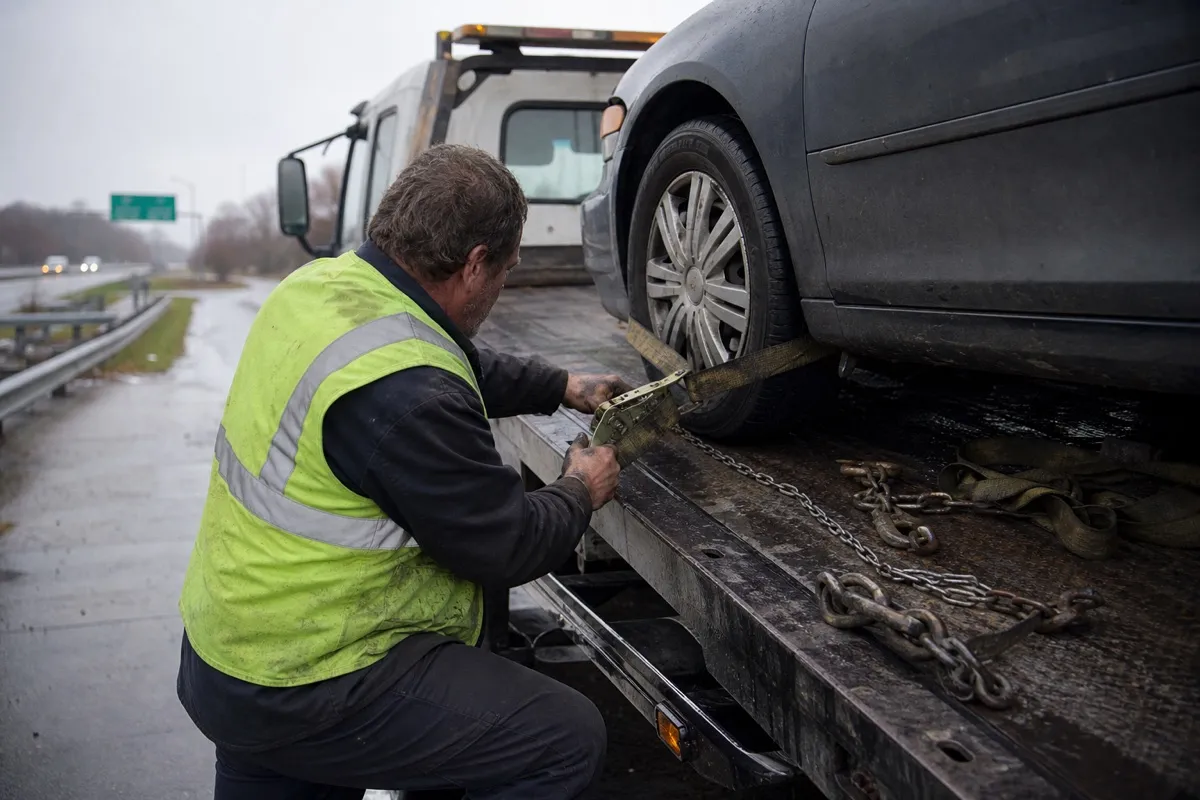
Towing and recovery contracts come from four main sources: motor clubs and roadside networks like AAA and Agero, police rotation lists, insurer and accident-management work, and municipal or fleet accounts. You win them by clearing each one's certification, insurance and 24/7 coverage requirements, then proving you answer calls and reach the scene fast.
Cash jobs keep the lights on. Contracts build a business. The gap between an operator scraping by on flag-down work and one with a full schedule almost always comes down to a handful of standing accounts that feed the truck steady work week after week. The catch is that nobody just hands them out. Every type has its own gatekeeper, its own paperwork, and its own bar you have to clear before they trust you with their members, their impounds, or their customers.
This is the playbook: the four account types, who to call for each, what they ask for, and the one requirement every single one of them quietly grades you on.
The four contract types at a glance
Most recovery contracts fall into four buckets. Each wants something different, and each is reached a different way.
| Contract type | Who to approach | What they require |
|---|---|---|
| Motor clubs and roadside networks | AAA, Agero, Allstate Roadside, Honk, Urgent.ly | Certification, insurance, fast acceptance and arrival |
| Police rotation | Your city or state police department or its list administrator | Certification, secure lot, genuine 24/7 coverage |
| Insurer and accident management | Insurers, accident-management firms, body shops | Liability and on-hook cover, storage, reliable callback |
| Municipal, fleet and private | Cities, fleet operators, repair shops, dealers | A bid or account, capacity, a number that always answers |
Work through them in roughly that order. The motor clubs are the most accessible entry point, police rotation takes an established operation, and the bigger fleet and municipal accounts tend to come once you have a track record.
1. Get signed up with the motor clubs and roadside networks
The motor clubs are the obvious first stop, and the easiest to break into. AAA, Agero, Allstate Roadside and the digital dispatchers like Honk and Urgent.ly do not crew every call themselves. They subcontract a large share of their jobs to a network of independent towers, and they are always assessing new operators in areas where coverage is thin.
To get on a network you apply directly as a contracted provider. Expect them to want:
- The right equipment for the work (a rollback or wheel-lift, sometimes a heavy-duty wrecker).
- Commercial auto, garage liability and on-hook insurance at the level they set.
- Recognized certification, usually TRAA National Driver Certification or WreckMaster training.
- A defined coverage area you can genuinely service around the clock.
Two things decide whether you keep the work once you are on. The first is acceptance speed: networks now push jobs out digitally and grade you on how quickly you accept and how quickly you arrive. The second is your answer rate. If their dispatcher calls and you do not pick up, the job rolls to the next operator, and your standing in the area slips. Per-call rates here are modest, but the volume keeps a truck busy, which is why steady operators treat motor-club work as their base load.
2. Get onto a police rotation list
Police rotation is the work most operators want and the hardest to break into. It covers vehicles cleared after collisions, vehicles impounded by police, abandoned and unregistered vehicles, and anything law enforcement needs moved off the road. It pays better than motor-club work, and it comes with storage and statutory fees attached, which is where a good chunk of the margin sits.
Every department runs its rotation its own way. Some contract a single operator for a zone; many run a rotating list of approved operators called out in turn. To get on the list you approach the department or its rotation administrator and clear a stricter bar than the motor clubs set:
- Certification, without exception (TRAA, WreckMaster, or whatever the department names).
- A secure, fenced and monitored storage lot.
- The full insurance schedule, including on-hook and garage-keeper cover for vehicles in your custody.
- The equipment to recover everything from a compact to a Class 8 truck, or a clear arrangement for the heavy stuff.
- Genuine 24/7 availability, documented, not promised.
That last point is the one that trips operators up. Rotation lists do not tolerate a call that goes to voicemail at three in the morning. A missed call-out is not just a lost job, it is a black mark against your place on the rotation. Showing that you answer every call, every hour, is often the difference between making the list and being passed over.
3. Win insurer, fleet and municipal accounts
The third bucket is the broadest: insurers and accident-management companies who need a vehicle recovered after a claim, fleet operators and carriers who need a breakdown cleared fast, repair shops and dealers who need vehicles moved, and cities that put abandoned-vehicle and lot-clearance work out to bid.
These come through relationships and paperwork rather than a single sign-up. Insurers and accident-management firms want an operator they can hand a claim to and forget about, with proper liability cover and secure storage. Fleet and trade accounts come from showing up reliably for a local shop or carrier until they put you on speed-dial. Municipal and other public work is usually awarded by formal bid, so you will be competing against other operators on price, capacity and coverage.
What unites them is unglamorous: every one of these customers is buying certainty. A fleet manager with a truck down on the interstate, or a body shop with a total blocking a bay, wants a number that is answered first time, every time. The operator who picks up wins the account. The one who calls back an hour later has already lost it.
4. Meet the answer-rate and response-time bar
Here is the thread running through all four contract types, and the part most guides leave out entirely. Certification, insurance and the right truck get you onto the list. What keeps you there is response time and answer rate. Motor clubs grade you on how fast you accept and arrive. Rotation lists demand documented 24/7 coverage. Private and fleet customers simply call the next operator if you do not pick up.
The problem is structural to recovery work. When the phone rings, you are usually the person who cannot answer it. You are strapping a car onto the deck, working a winch on a live shoulder, or driving with both hands and your eyes on the road. The one contract requirement you are most often graded on is the one you are physically least able to meet. So the calls that decide whether you win and keep contracts are exactly the ones that go unanswered, and an unanswered recovery call is an unbilled job that has already rung the next company on the list.
This is the gap an AI answering service closes for a one-truck operator. Jodie answers every call instantly, day or night, captures the vehicle, location and problem, accepts the urgency, and texts the job straight to you while you finish loading the last one. You hit the 24/7 answer rate the contracts demand without hiring a night dispatcher or losing sleep, which is the whole point of a towing answering service that fits how recovery work actually runs.
The 80% rule and what it means for your account mix
You will hear towing operators talk about the "80% rule," and it is worth getting right because it shapes which contracts you can safely take on. The 80% rule means you should never load or tow more than 80 percent of your truck or trailer's maximum rated towing capacity. The headroom absorbs the real world: a wet ramp, a hill start, the weight of fuel and recovery gear, and a wreck that will not sit square on the deck.
For contract work, treat it as a planning rule rather than a one-off check. Before you chase an account, match the truck you would put on it to the heaviest vehicle you would realistically be called to recover, then make sure that load stays under 80 percent of the truck's rating. A police rotation or fleet account that regularly throws up vans and box trucks needs a different truck from a motor-club territory that is mostly cars. Bid for the work your fleet is genuinely rated for, and your account mix stays profitable instead of forcing you to turn jobs away or run a truck past its limit.
Get the mix right and the contracts compound: motor-club volume keeps the truck moving, police rotation and recovery work lifts the margin, and storage fees top it up. None of it pays out, though, if the call goes unanswered. Win the contracts on certification and capacity, then keep them on the one number that decides everything in recovery work: whether the phone gets answered. For the wider picture of how those numbers stack up, see what a towing business actually makes, and which towing software ties the dispatch together once the call is in.
Frequently asked questions
- How do towing companies get contracts?
- Towing and recovery contracts come from four main sources: motor clubs and roadside networks such as AAA, Agero and Allstate Roadside; police rotation lists run by each department; insurer and accident-management work; and municipal, fleet and private accounts. You apply or bid for each, meet their certification, insurance and coverage requirements, then keep the work by answering calls and reaching the scene inside the response time they set.
- What is the 80% rule for towing?
- The 80% rule means you should never load or tow more than 80 percent of your truck or trailer's maximum rated towing capacity. The extra headroom covers real conditions: a wet ramp, a grade, the weight of fuel and equipment, and a wreck that will not sit square on the deck. For contract work it is a planning rule. Match the truck you put on each account to the heaviest vehicle you will realistically recover, then stay under 80 percent of its rating.
- What do I need to become a roadside assistance provider?
- You need commercial auto and garage liability insurance, on-hook coverage, a rollback or wheel-lift that suits the work, a secure storage lot, recognized certification (most networks want TRAA National Driver Certification or WreckMaster-trained operators), and a defined coverage area. The requirement most checklists skip is the one every network actually grades you on: the ability to answer the call and accept the job fast, around the clock.
- How profitable is a tow business?
- A towing business can be steadily profitable, but the margin is set less by your rates than by your answer rate and your account mix. Motor-club work pays modest per-call rates but keeps the truck busy; police rotation, recovery and storage work pays more. The quiet leak is the unanswered call, because in towing an unanswered call is an unbilled job. We break the numbers down in our guide to what a towing business makes.
More towing services guides
How much does a tow truck business make?
What does a tow truck business really clear? We break down revenue per truck and per job, the costs that quietly eat the margin, and why every unanswered call is an unbilled tow that caps your profit.
Best towing software in 2026: a no-nonsense buyer guide
An independent buyer guide to towing software. Compare the real dispatch, impound and billing tools in one table, see what each tier costs, and find the one layer of the stack every vendor skips: how the phone actually gets answered.